Review
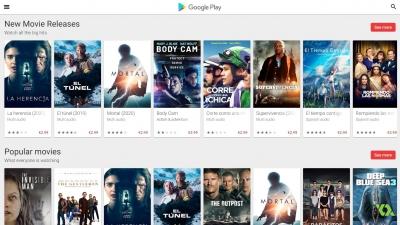
Google Play (formerly Android Market) is a digital distribution service developed by Google LLC. It serves as the official app store for Android systems, allowing users to browse and download apps developed with the Android software kit and published through Google. Google Play also serves as a digital media store, offering music, books, movies, and television shows.
Google Play launched on March 6, 2012, bringing together the Android market, Google Music, and Google's eBook store under one brand, marking a change in Google's digital distribution strategy. The services included in Google Play are Google Book Search, Google Play Games, Google Play Movies & TV and Google Play Music. After the rebranding, Google has gradually expanded the geographical support of each of the services. Google Play is available worldwide, with only a handful of exceptions, while Google Play Music, Books and Movies & TV is primarily available in America, parts of Europe, and parts of Asia.
The applications are available through Google Play, can be downloaded free or at an affordable price. Google allows users to purchase content with credit or debit cards, operator billing, gift cards, or through PayPal. Users can request a refund within 48 hours of purchase if "something you purchased does not work, is not what you expected, was purchased by accident, or you have changed your mind about the purchase."
Applications can be downloaded directly to an Android device through the Play Store mobile application or by deploying the application on a device from the Google Play website. Applications that exploit the hardware capabilities of a device can target users of devices with specific hardware components, such as a motion sensor (for motion-dependent gaming) or a front-facing camera (for online video conferencing). Android apps can request or require certain permissions on the device, including access to body sensors, calendar, camera, contacts, location, microphone, phone, SMS, and storage. The Google Play store had more than 82 billion app downloads in 2016 and has reached more than 3.5 million apps published in 2017.
Additionally, developers from more than 150 locations can distribute apps on Google Play, although not all locations support merchant registration. To distribute applications, developers have to pay a one-time registration fee of $ 25 for a Google Play Developer Console account. App developers can control which countries an app is distributed to, as well as the app's price and purchases in each country. Developers receive 70% of the app price, with the remaining 30% going to the distribution partner and operating expenses.
Tip on how to change the country of the Google Play Store on your Android phone and the best thing is that you don't need a root, you just need a VPN.
In fact, you can get one from the Google Play store directly ... First: go to your Play Store and then search for VPN Melon. If your country is (for example) Italy, by default the Google Play Store will be based for you in Italy or whatever you are looking for. It will show you the application that is only available in Italy or that you know around the world, as if there was an application that is only available in the US, Canada, India or any country ... So, you must change the country, to That if you search for the VPN melon to use it, click there and open the app and you will see which country is selected by default. When you scroll down, you will find countries with your own flag, so search for the country you are interested in.
Once connected, double check it on the Google Play Store. If it is still impossible for you to find what you are looking for, there is one more thing you can do to solve this problem. Second: find your Android phone settings and scroll down until you see app manager click there and you will see all your applications.
You need to find the Google Play store and then click the FORCE STOP button (but not necessary if you don't want to) and then go to STORAGE - click there and you will have the option to CLEAR DATA and CLEAR CACHE, just click in DELETE DATA.
Then you can finally check how well you did. Go and search again for this application that you are trying to find. You can experience this with other countries, just go back and select the country you are interested in, then go to settings - storage and delete the data.
This little tip can make you taste great in your daily tasks :)